Sedona’s Official City Bird
Sedona’s unique environment is home to one of the west’s most beloved residents: the Anna’s Hummingbird (Calypte anna). To celebrate this bird, a spectacular year-round resident who brings joy and delight to Sedona citizens and visitors alike, the International Hummingbird Society, Northern Arizona Audubon Society, Butterfly Enthusiasts of Northern Arizona, and Keep Sedona Beautiful joined together to ask the Sedona City Council to make the Anna’s Hummingbird the Official City Bird of Sedona. In addition, some 850 people signed a petition supporting the request.
In July 2026, Sedona made history when the City Council voted to make the Anna’s Hummingbird the first official city bird in Arizona. Sedona is the only city in the U.S. to name this species as its official City Bird.
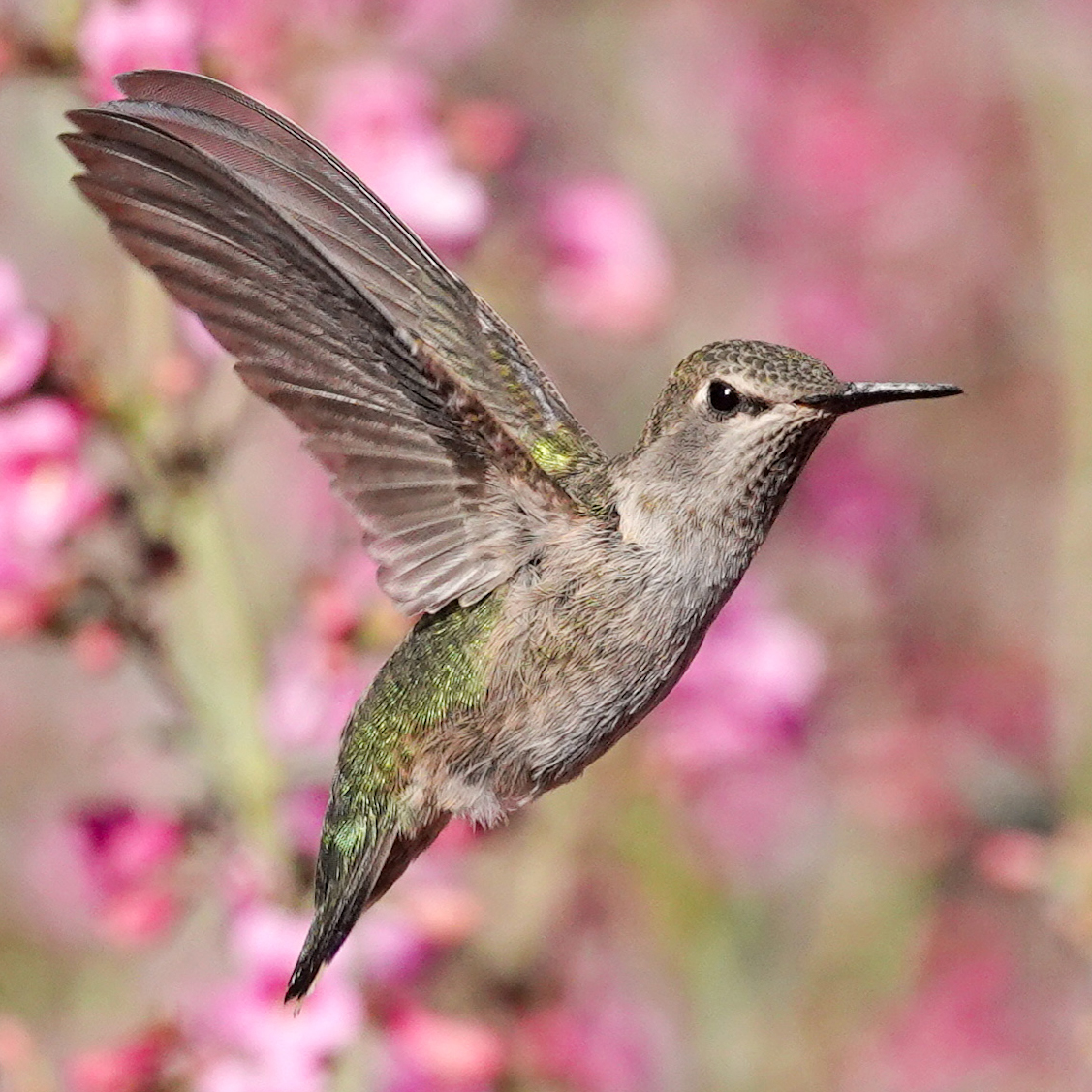
Female Anna’s
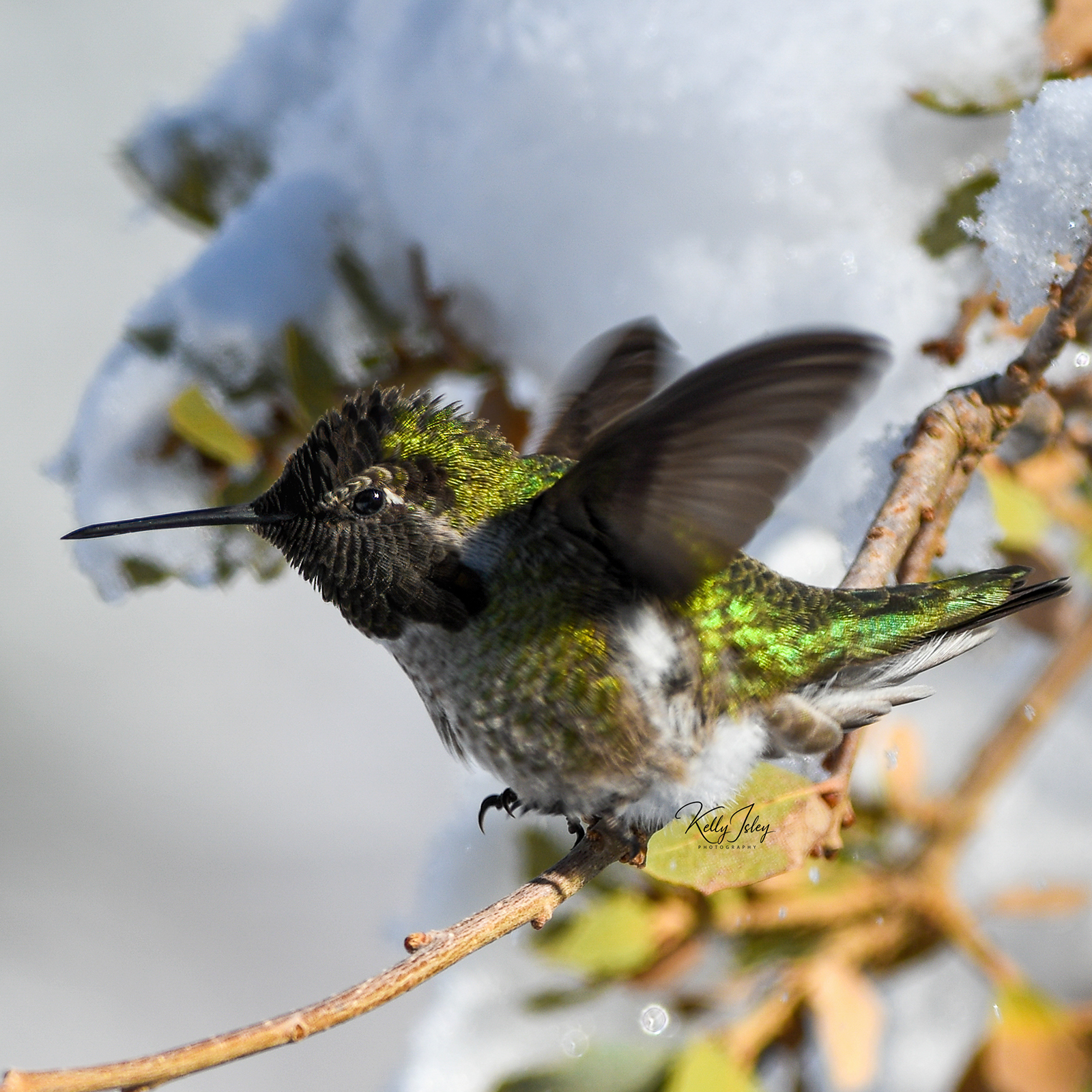
Snow doesn’t faze Anna’s
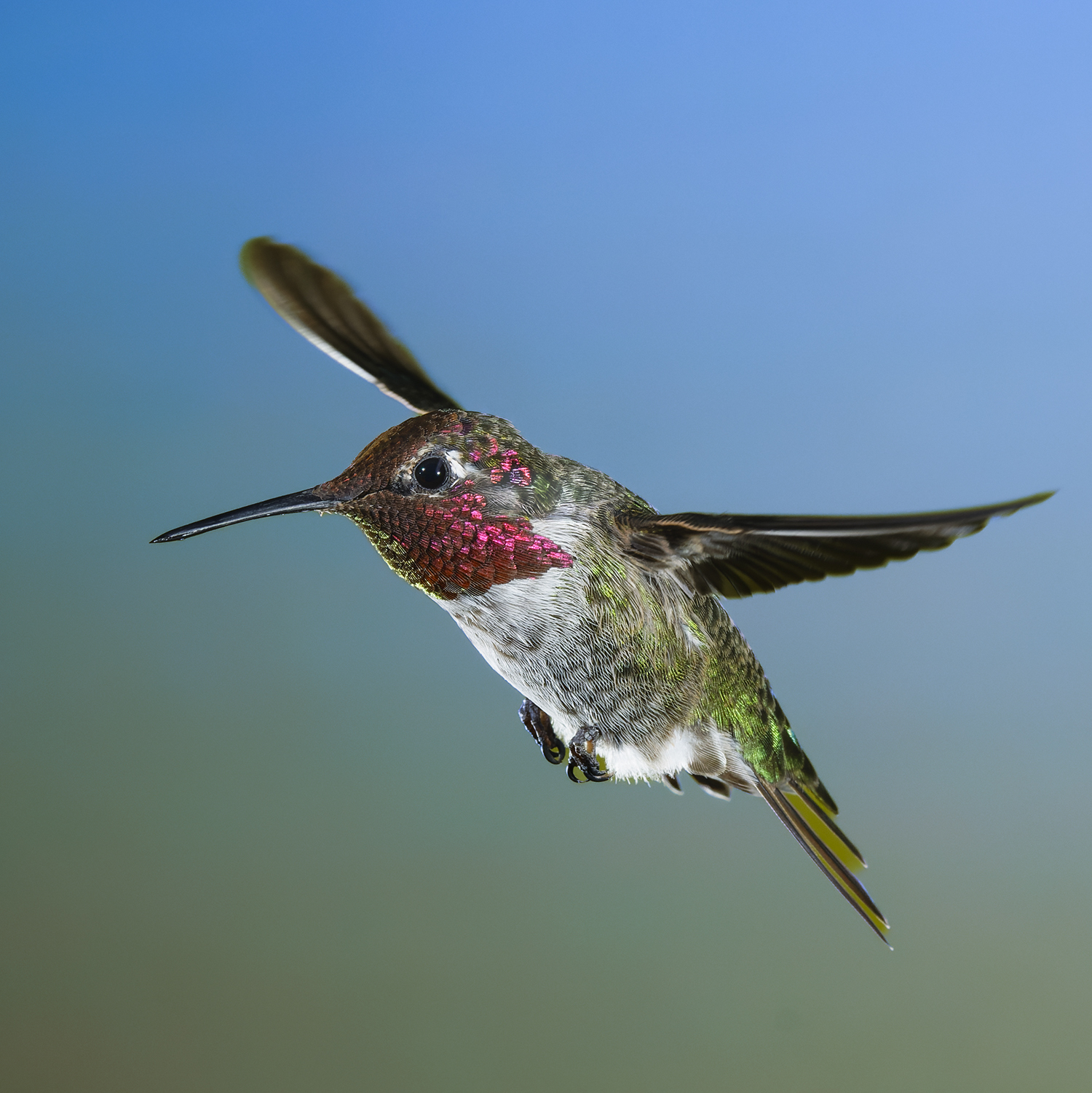
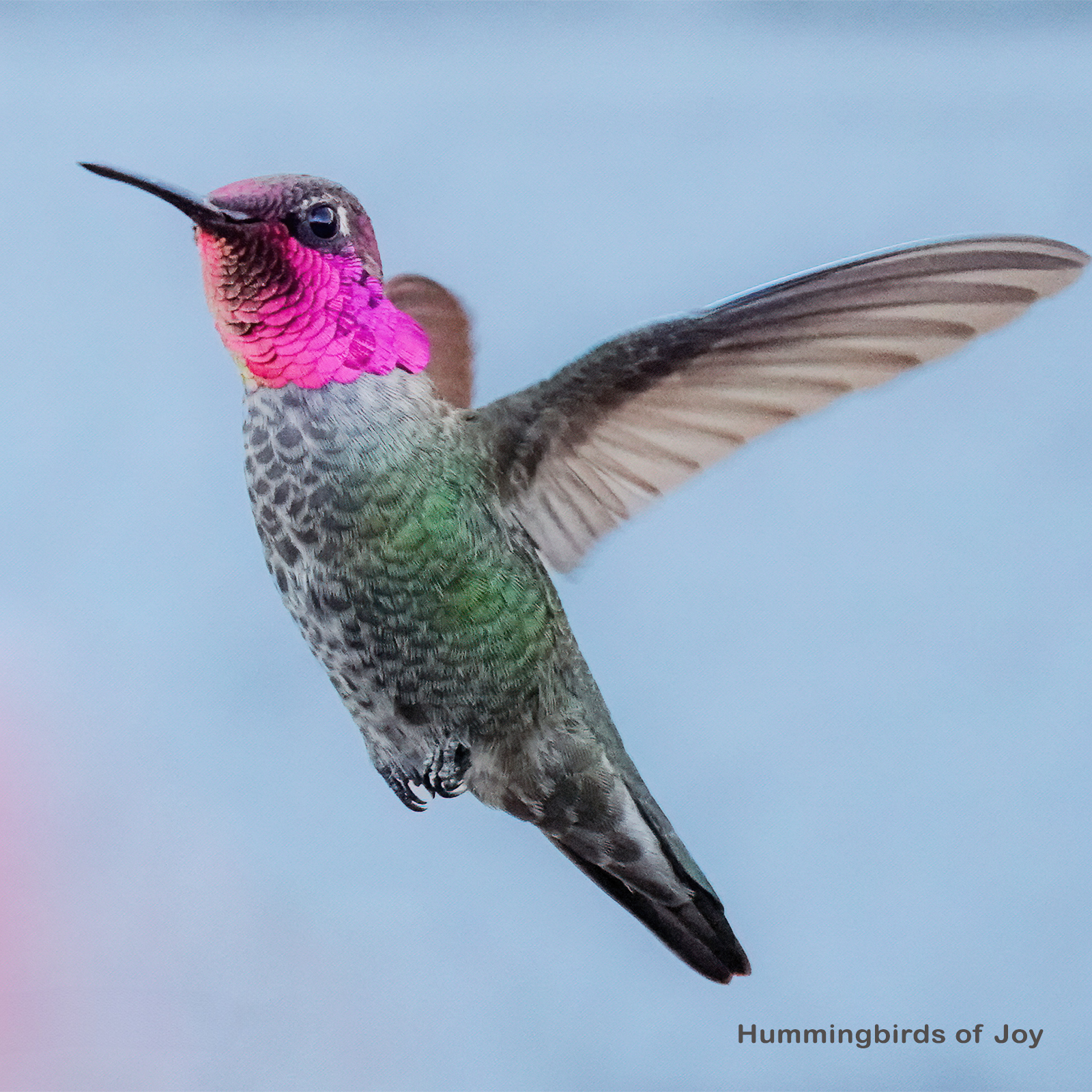
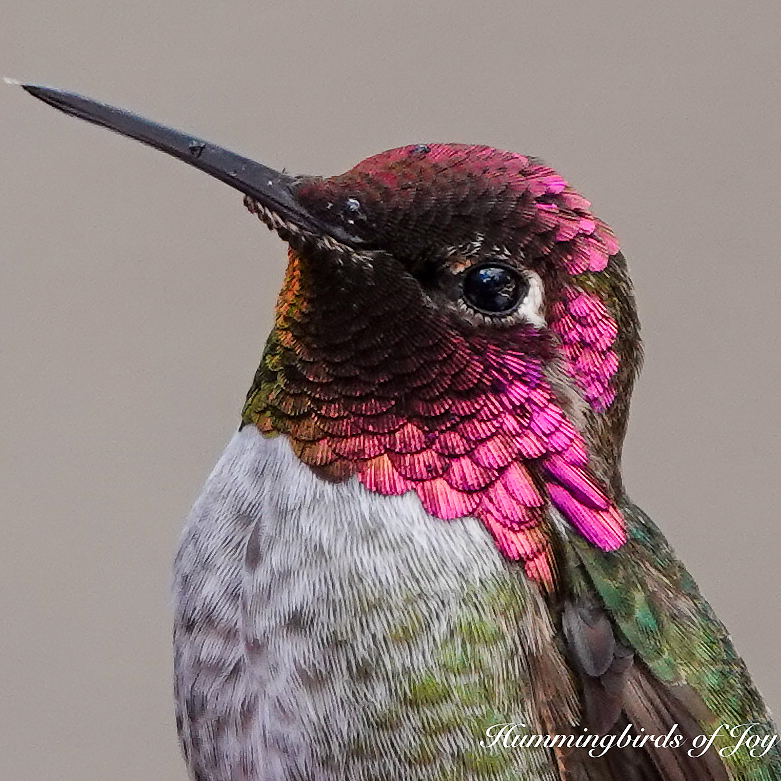
Male Anna’s
Extreme Diving and Other Courtship Maneuvers
During courtship, a male will put on a memorable display of exorbitant speed and strength, rising up some 130 feet before diving down at a speed as fast as 60mph and creating a single loud “pop” sound as air whips through his specialized tail feathers when he pulls up at the bottom of the dive. The speed of 60 miles per hour equates to 385 times his own body length every second: faster than a peregrine falcon (200 body lengths per second), or even a space shuttle re-entering earth’s atmosphere (207 body lengths per second). Researcher Chris Clark found that for a split second as the tiny bird pulls up, he experiences g-forces 10 times that of normal gravity. No other flying being (except fighter pilots) experiences forces like that.
He will also perform a shuttle display in front of the female, facing her as he hovers left and right and flares his gorget. And he sings to her. Anna’s males sing more than most other hummingbirds — a high-pitched, somewhat complex, metallic song they learn as youngsters. The male Anna’s brain has a larger, more active vocal center than that of other hummers; it is similar to that of songbirds.
Nesting
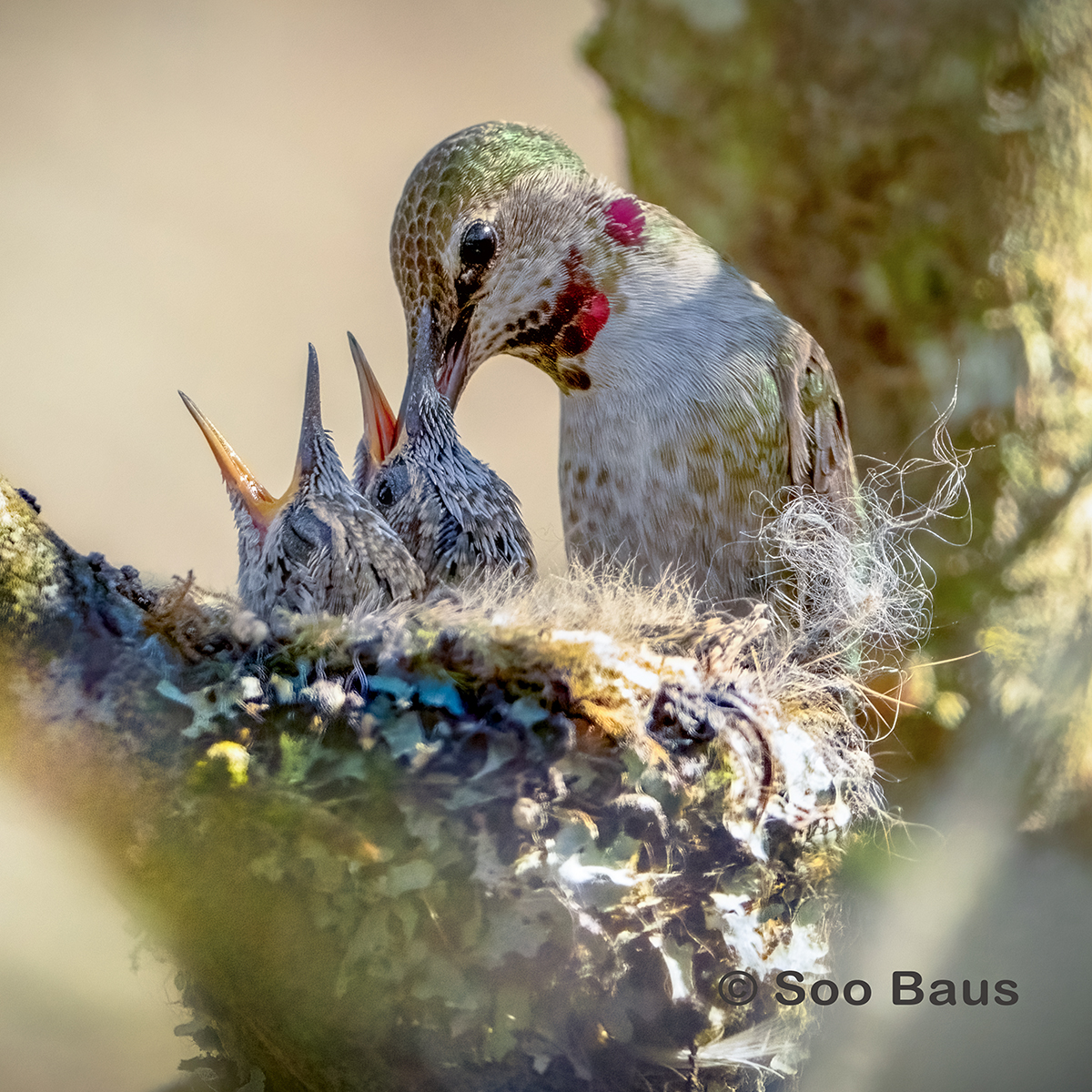
Anna’s typically breed several times per year and begin nesting as early as late December. As with other hummingbird species, the female creates her nest and raises her chicks alone. She doesn’t want a brightly colored male bringing predators’ attention to her fragile youngsters. She builds the 1.5-inch wide, cup-shaped nest out of soft plant material and spider webs, tamping down the inside with her feet and using her bill to create the outer structure. The spider webs are highly elastic, allowing the nest to hold together while expanding to accommodate the growing chicks. While Anna’s naturally nest in sheltered trees, they often build nests close to a home on a windchime, clothes line or light string; human activity keeps predators away.
There are generally two eggs per clutch. The mother incubates the eggs for 16 days. The chicks leave the nest after 20 days and the mother will continue to feed them for a short time after that.
When she is ready to lay a new set of eggs a female will often return to her previous nest and refurbish it by adding a new floor and extending the sides upward. Some nests will be four or five “stories” tall!
About that Name
When they were first classified as a species by French ornithologist René Lesson in 1829, these birds were named Anna’s Hummingbirds to honor Anna Masséna, wife of Francois Victor Masséna, the Duke of Rivoli and Prince d’Essling—a dedicated French amateur ornithologist.
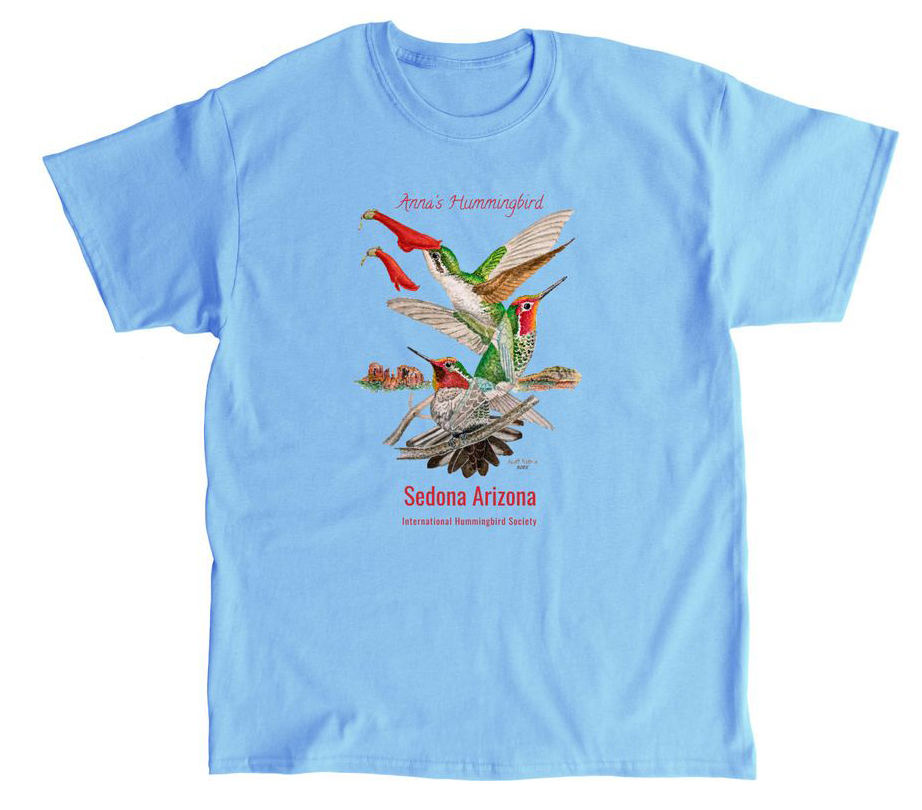
Anna’s Hummingbird T-shirt
Master bander and artist Scott Rashid created this stunning painting of two male and a female Anna’s Hummingbirds. Now you can wear it as a symbol of Sedona. You pick the style, size and color you want (there are 9 different styles, including sweatshirts) and have it shipped directly to your your home.